



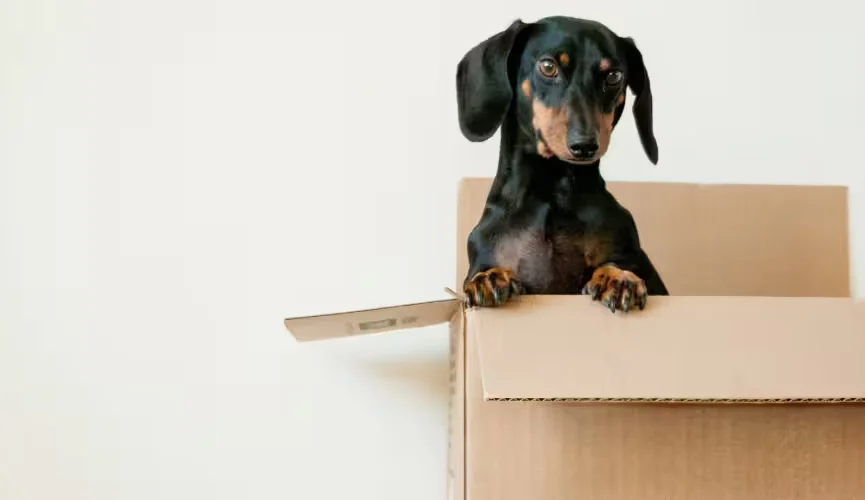
How to Move Safely With Pets or Children in BC
The safest moving day for pets and young children keeps them away from the open doors, heavy items and moving truck. Arrange a sitter or a closed-off quiet room, pack a day-one kit for each, and move pets yourself, since movers can’t transport live animals. After the move, update your pet’s details with the BC Pet Registry and your new municipality’s dog licence, and childproof the new home before you unpack the rest.
Pets vs Kids: What to Arrange
| Pets | Children | |
|---|---|---|
| On moving day | Sitter, daycare, kennel, or a closed room with water and a sign on the door | A sitter or relative, or a closed room with a supervising adult |
| Transport | In your own car, in a secured carrier or harness | In your own car, in the correct car seat |
| Day-one kit | Food, water, bowls, litter or bags, leash, medication, bedding, a favourite toy | Snacks, water, a change of clothes, medication, chargers, favourite toys and bedtime items |
| Paperwork | Vet records, vaccination history, BC Pet Registry ID | School records and registration documents |
| After the move | Update the registry, microchip and municipal dog licence | School and childcare registration, family doctor |
Moving With Pets
- Keep the routine. Feed and walk them at the usual times in the days before the move.
- Get them used to the carrier a week ahead by leaving it open with bedding inside.
- Move them out of the way. Open doors and busy crews are when cats and dogs slip out. A sitter, daycare, or a locked room with a “Do not open” sign works.
- Move them yourself, last out of the old home and first into the new one. Movers can’t carry live animals, including fish tanks with fish in them.
- Talk to your vet if your pet gets anxious or carsick, and bring copies of their records.
Settling pets into the new home
- Start cats in one quiet room with their litter, food and bed, then open up the home over a few days.
- Walk dogs around the new neighbourhood on a leash before letting them into a yard, and check fences for gaps.
- Update your contact details with the BC Pet Registry and your pet’s microchip company.
- Buy a dog licence from your new municipality; most Lower Mainland cities require one.
Moving With Children
- Tell them early and explain what will happen on the day in simple terms.
- Let them pack a box of their own things, and open it first at the new home.
- Keep them clear of the action. Stairs, doorways and the truck ramp are the risky spots. A sitter or a supervised room is safest for young children.
- Set up their room first so the first night feels familiar.
- Childproof before unpacking: outlet covers, window locks, furniture anchors, and stair gates where needed.
What to expect by age
| Age | Main concern | What helps most |
|---|---|---|
| Under 2 | Disrupted sleep and routine | Keep nap and feeding times fixed; set up the crib first at the new home |
| 3–5 | Fear of the unknown | Picture books about moving, a “special box” they pack themselves, reassurance that toys and pets are coming too |
| 6–12 | Leaving friends and school | A say in their new room, and a plan for staying in touch with friends |
| Teens | Losing their social circle and independence | Tell them early, give them real input, and time to say goodbye |
School and childcare
Check your new address against the school district’s catchment map before you sign a lease or offer, then register with the district as soon as you have proof of address. Childcare waitlists can be long in the Lower Mainland, so apply early.
Plan the Day Around Them
- Pick a weekday if a sitter or school day frees up the house.
- Book a fixed time slot so you know when to drop off and collect children and pets.
- Keep the day-one kits in your car, not on the truck.
Tingsapp shows a fixed price before you book, and you can track the crew in the app, which makes it easier to plan sitters and drop-offs around the move. Get a price.
Sources
- BC SPCA — BC Pet Registry and moving with pets (spca.bc.ca, bcpetregistry.ca), 2026
- Province of BC — school registration and child care (gov.bc.ca), 2026
- Tingsapp Help Centre — items that can’t be moved, including live animals (tingsapp.com/help), 2026
Related guides
- Smart Unpacking Tips to Settle In Faster
- Moving Checklist for BC: 8 Weeks to Moving Day
- Your Moving Day Essentials Checklist
- Get an upfront moving price
Frequently Asked Questions
Can movers transport my pet?
No. Movers can’t carry live animals, so move pets in your own car in a secured carrier or harness.
Where should my pet be on moving day?
Ideally with a sitter, at daycare or at a kennel. Otherwise, in a closed room with water, bedding and a sign telling the crew not to open the door.
How do I help my cat settle into a new home?
Start with one quiet room with litter, food, water and familiar bedding, and keep the cat indoors while it adjusts before giving it the run of the home.
Do I need to update my pet’s registration after moving?
Yes. Update your details with the BC Pet Registry and the microchip company, and get a dog licence from your new municipality if it requires one.
What should be in a child’s moving-day kit?
Snacks, water, a change of clothes, any medication, a charger, and favourite toys and bedtime items, kept in your car rather than on the truck.
How far ahead should I tell my child about a move?
As soon as it’s certain. Younger children do better with a few weeks’ notice and a visual calendar; teens should be told first and involved in decisions about their space.
How do I help my child settle in after the move?
Set up their room first, keep routines steady, visit local parks and the new school together, and expect a few weeks of adjustment.
When should I register my child for a new school?
As soon as you have proof of your new address. Check the district’s catchment map before you commit to a home.
