


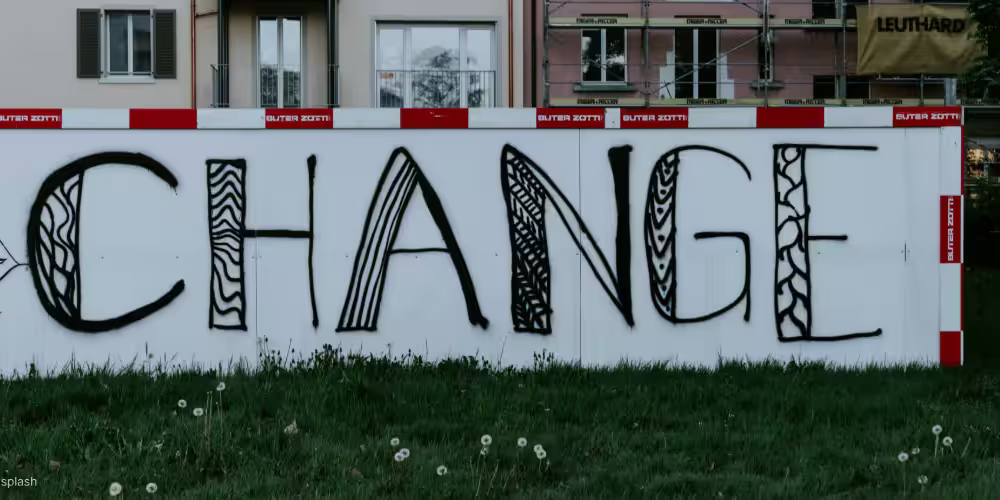
How Moving Can Spark Positive Life Changes
A move is one of the few times you handle everything you own and look at every room with fresh eyes. That makes it a natural reset point — a chance to drop what you've outgrown, rebuild the routines that stopped working, and start in the new place without carrying the old clutter across. None of that happens automatically. It happens if you use the move deliberately instead of just surviving it.
Here's how to get the reset, not just the boxes.
Use the Pack as an Audit
Packing forces a decision on every object: worth the box, or not. That's a filter you rarely get otherwise. Sort as you go into keep, sell, donate and recycle, and be honest about the "might need it someday" pile — if you'd not pay to move it and unpack it, it isn't a keep.
The payoff is practical as well as mental. Less volume means a smaller truck, a shorter loading time and fewer boxes to open at the other end. A move where you arrive with only what you use is a move you finish unpacking in days, not months. The full method is in what to keep, sell or donate when preparing for a move and 7 smart ways to downsize before your move in BC.
Redesign the Routines That Didn't Work
You're setting up rooms from zero, which means you can build in the habits you kept meaning to start instead of recreating the old layout by muscle memory.
- Put the friction where you want it. If you want to read more and scroll less, the charger goes in the kitchen and the books go by the bed — not the reverse.
- Give the work-from-home setup a real spot. A defined desk with a door or a divider beats a laptop on the couch for both focus and knowing when the day is done.
- Make the healthy option the easy one. Bikes and shoes near the door, the good pan at the front of the cupboard, the treadmill not buried behind boxes.
- Map the neighbourhood on purpose. Walk to the grocery store, the pharmacy, the transit stop and the nearest park in the first week. Knowing the ten-minute radius on foot is what makes a place start to feel like home.
Match the Move to the Life You Want Next
If the move is also a change of area, the type of neighbourhood shapes your daily life more than the specific address. The honest trade-offs:
| Area type | What changes day to day | The trade-off |
|---|---|---|
| Near transit, walkable core | Less driving, more walking, events and errands close by | Less space per dollar, more noise, parking is a cost |
| Suburban | More square footage, yard or balcony, quieter for remote work | A car becomes close to mandatory; longer trips for everything |
| Coast or mountain edge | Trails, water and outdoor recreation on your doorstep | Longer commute, fewer services, weather and access limits |
For how these play out across specific Lower Mainland communities, see city exploration in BC.
Settle the Admin in the First Two Weeks
A clean start includes the paperwork. Doing it early prevents missed mail and lapsed coverage:
- Mail forwarding: Canada Post forwarding can be set to start on your move date; give it a few business days to take effect.
- Driver's licence and vehicle: in BC, update your address with ICBC within 10 days. If you moved to BC from another province, you generally have 90 days to switch your licence and insurance.
- Health coverage: update your address for provincial health (MSP in BC); new residents from outside the province have a waiting period before coverage starts, so keep prior coverage active.
- CRA and benefits: update your address with the Canada Revenue Agency so benefit and credit payments aren't interrupted.
- Utilities, banking, insurance, subscriptions: set new-address start dates and cancel the old ones for the day after moving day.
A Low-Stress Moving Plan
- Start packing early. Seasonal items, books and decor weeks ahead removes the last-week panic.
- Label by room, with a rough contents list. Future-you unpacking at 9pm will be grateful.
- Protect what matters. Proper boxes, paper and furniture blankets prevent the scuffs that sour a new start.
- Pack a first-night box. Toiletries, chargers, basic tools, a change of clothes, medications and documents — so nothing essential is trapped in a stack of boxes.
- Keep valuables and documents with you. Passport, laptop, jewellery and papers ride in your car, not the truck.
Handing the heavy lifting to a crew frees you to deal with the parts that actually need you. Get an upfront price once you know what's staying, and see top tips for a stress-free move in the Lower Mainland.
Frequently Asked Questions
How long does it take to feel settled in a new place?
Physical unpacking takes a few days to a couple of weeks. Feeling part of a new neighbourhood usually takes one to three months. It goes faster if you use local businesses regularly, walk the area, and join a community group, class or volunteer role rather than waiting to be invited in.
Should I move my furniture or sell it and buy new?
Move pieces that fit the new layout and are in good condition — that's almost always cheaper than replacing them. Sell or donate items that won't fit tight corridors, a smaller space or a different style, and put the proceeds toward right-sized replacements. Getting this decision right before the truck is booked keeps the move smaller and cheaper.
How do I keep a positive mindset if moving day runs long?
Build buffer time into the schedule so a delay isn't a crisis, and book a crew that gives you clear updates through the day. Keep your essentials box and valuables in your own vehicle so a slow truck doesn't leave you without the things you need that night.
What if I have to move on very short notice?
Book as early in the day as you can, keep the inventory tight by leaving low-value items behind, and lock in an upfront price so a rushed timeline doesn't also mean an unpredictable bill. A short-notice move is manageable when the scope and the cost are both fixed.
What's the first thing to do in the new place?
Before the boxes come in, locate the electrical panel, the water shut-off and the thermostat, and check that heat, water and a couple of outlets work. Then set up the bed and the first-night box so day one ends with somewhere to sleep and everything you need within reach.
Make the Move Count
The boxes are the smallest part of a move. The lasting change is what you choose not to bring, the routines you rebuild, and how quickly you make the new place yours. Plan for those, book a crew for the lifting, and start your move with a plan instead of a scramble.
Sources
- Canada Post — Mail forwarding service (canadapost-postescanada.ca), 2025.
- ICBC — Moving to BC and changing your address (icbc.com), 2025.
- Government of British Columbia — Medical Services Plan eligibility and address changes (gov.bc.ca), 2025.
- Canada Revenue Agency — Change your address (canada.ca), 2025.
Related guides

Download Tingsapp
Book faster, track in real-time, and get exclusive offers on the go.
Planning a move?
Get your move booked today
Enter your move details to see an upfront price and find the right help for your move.
Book a move now