



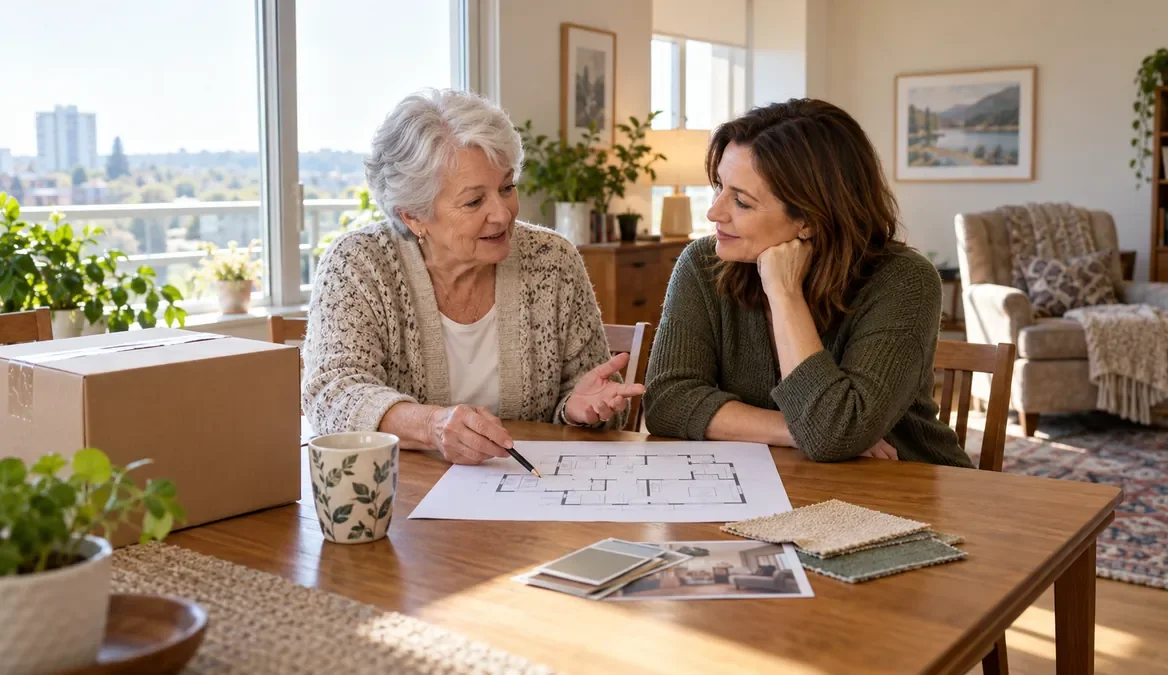
Moving an Older Parent or Relative: A Practical Coordination Plan
Helping an older parent or relative move works better when everyone knows whose decision it is and what help has actually been requested. A smaller home may be part of the plan, but the immediate job is coordination: agreeing who does what, keeping essential belongings available and making the destination usable on arrival.
Start with the person's priorities
Ask what a good move would look like to your relative. Which belongings need to be in place first? Would they prefer to be at pickup, arrive ahead of the truck or have someone receive it? How do they want updates? Do not assume age determines any of these answers.
CMHC's housing-options guidance encourages considering personal preferences, budget, location, services and present and future needs. If the destination is still undecided, resolve those questions before turning the discussion into a packing deadline.
Write down the agreed boundaries of your help. Being the person who books transport does not automatically mean you should decide which possessions leave the household. If someone else has formal decision-making authority, confirm its scope through the appropriate documents or qualified advice; do not infer authority from family relationship alone.
Create a small coordination sheet
Keep one current version, with your relative's agreement about who receives it. Share only the information each helper needs. Movers need the inventory, route and relevant access instructions; they do not need a family medical history.
| Role | Responsibility to agree |
|---|---|
| Person moving | Preferences, furniture placement and decisions they want to retain. |
| Booking contact | Inventory, accepted quote, change requests and provider messages. |
| Pickup contact | Identify what travels and what stays; check the old home. |
| Destination contact | Keys, building access, room labels and receipt of the load. |
| Personal companion, if requested | Separate travel, breaks, refreshments and the person's own schedule. |
| Backup contact | Take over agreed tasks if someone is delayed or unreachable. |
One person may fill several roles. The point is to avoid two people giving contradictory instructions or everyone assuming someone else has the keys. Agree who can approve added work and spending, and keep decisions in the booking conversation.
Make the new room plan concrete
Measure the important furniture and the destination before packing. Draw a simple placement plan showing the bed, favourite chair, table and clear walking routes. Check opening drawers and doors as well as the footprint. If moving into a managed residence, ask its contact about delivery times, furniture restrictions and what setup is actually included.
Choose a few familiar belongings your relative wants available immediately: a reading lamp, favourite cup, photographs, a radio or a particular blanket. Photograph an existing shelf arrangement if they would like it recreated. Treat that as a preference to preserve, not a reason to keep a layout that does not work safely in the new space.
If reducing possessions is necessary, handle that as a separate project using the downsizing guide. Do not let a transport deadline become an unplanned disposal session.
Keep the person's journey separate from the furniture journey
Arrange passenger transport that fits the person's requirements. Do not assume a moving vehicle carries customers or that movers provide personal care. Keep keys, identification, phone, charger, glasses, necessary personal supplies and medication with the person or an agreed companion, rather than in a box that may arrive later. Follow existing medication instructions; changes to care or treatment belong with the relevant professional.
Build in realistic breaks and a place to sit away from the carrying route. Ask your relative whether frequent updates help or whether one named contact should filter logistical questions. If specific accessibility or support arrangements are needed, confirm them directly with the building, transport service or appropriate professional before the day.
Use a first-evening handover
Before the helper responsible for arrival leaves, walk through the essentials together. The aim is a working home, not a fully decorated room.
- Confirm that keys and building entry work and that the person knows where they are.
- Check that the bed and the route to the bathroom are usable and clear.
- Place a phone, charger and agreed contact list within convenient reach.
- Set out drinking water, a simple meal and the belongings requested for that evening.
- Check lighting and the location of switches; remove packing from walking routes.
- Agree who will call or visit next and when, rather than assuming somebody will.
BC's home safety checklist highlights clear routes, lighting and reachable everyday items. For equipment such as grab bars or other assistive devices, use appropriate professional advice on selection and placement. Ordinary furniture delivery does not confirm that a home meets someone's individual needs.
Close the loop after arrival
Check back on the agreed day. Ask which practical tasks remain inconvenient: finding clothes, reaching a cupboard, using a phone or receiving visitors. Record a short follow-up list and assign each item. If a piece is missing or damaged, preserve the evidence and use the provider's reporting procedure. If the move is in White Rock, the local access guide covers hills, parking and building rules.
Frequently asked questions
Does helping book the move mean I can choose what gets donated?
No. Agree decision ownership with the person moving and respect any applicable formal authority. Keep disposal decisions separate from the transport booking.
Do movers provide personal transport or care?
Do not assume either is included. Arrange appropriate passenger travel and any required support separately, and confirm the provider’s actual scope.
What should be ready before the first evening?
A usable bed and bathroom route, lighting, phone access, food and drink, requested familiar belongings, and a named next contact.
Sources
Researched 2026-10-24. Check the linked source for later changes.