



How to Move a Large Rug: Rolling and Moisture Protection
For a large rug, first identify its material, construction and condition. Then confirm how the maker recommends packing it. Rolling is often suitable, but the direction, support and wrapping are not universal. A fragile antique, a backed tufted rug and a washable rug system should not receive the same instructions simply because they all cover a floor.
Read the label and inspect both sides
Photograph the care label, face, backing, fringe and existing marks. Note the fibre content, construction, dimensions and any loose backing or previous repairs. If a label is missing, ask the retailer or a qualified rug specialist before choosing a method that bends or compresses the rug.
Keep a separate rug pad identified with the room and rug it belongs to. Check the pad's own instructions; a detachable cover and pad can have different care requirements. Do not assume that a washable cover makes every layer washable or suitable for the same packing method.
| Condition or construction | Decision before packing |
|---|---|
| Sound flatwoven rug | Confirm approved rolling direction, support and any special edge or fringe care. |
| Pile or tufted rug | Ask which side faces inward and how the backing should be supported. |
| Loose backing, tears or fragile areas | Seek assessment before rolling; bending may worsen an existing weakness. |
| Antique or valuable textile | Arrange advice from a qualified rug or textile specialist. |
| Dampness or suspected mould | Resolve appropriate care and handling before packing it with clean household goods. |
Why pile-in versus pile-out needs a specific answer
Surya's rug guide generally recommends pile facing inward after considering whether the face or backing is more fragile. By contrast, the Canadian Conservation Institute's rolled-textile storage guidance describes pile textiles rolled with the pile outside and distinguishes them from flat textiles. These recommendations address different objects and care contexts.
The practical conclusion is to obtain instructions for your rug, rather than choosing whichever generic tip appears first. CCI also identifies fragile or unstable textiles that should not be rolled for storage. Share photographs and the care label when asking a specialist; mention whether the plan is a direct journey or an extended storage period.
Prepare an even, supported roll where approved
Clear enough clean, dry space to work without catching the fringe or pushing the rug against furniture. Follow the maker's cleaning instructions and allow any permitted cleaning to dry fully before packing. Do not improvise wet cleaning to meet a moving deadline. Armadillo's care guidance stresses keeping rugs dry; the appropriate cleaning process still depends on the particular product.
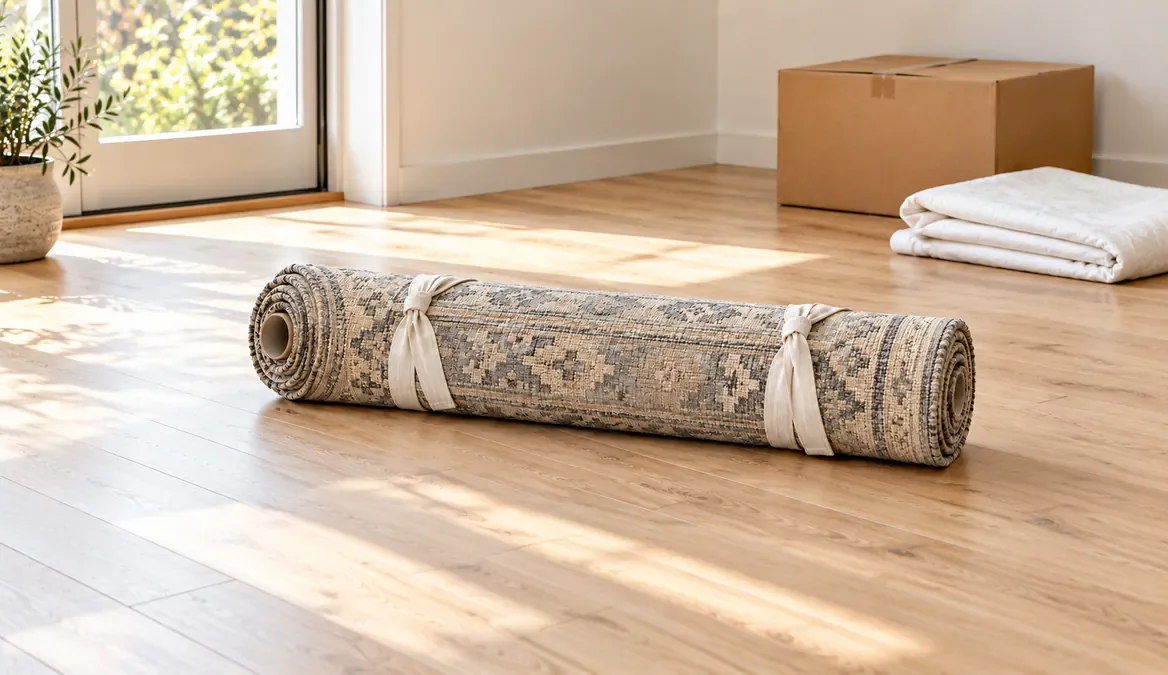
For rugs suitable for rolling, use the recommended direction and support, keep the roll even and avoid forcing an unwanted fold into it to shorten the package. CCI's storage method uses an appropriate support tube and loose cotton ties. Ask about support diameter and protective materials where the textile needs specialist care. Keep adhesive away from the rug itself.
Measure the finished package, including the support and protection. Give the mover its length and diameter, approximate weight and any handling restrictions. Check it against lift doors, hallway turns and the vehicle, not just the empty floor space at the destination. An unsupported long roll should not be dragged along the ground or bent to make a corner.
Separate weather protection from storage wrapping
Arrange a dry staging area at both homes and keep the roll off wet pavement. If an additional outer weather cover is needed for the brief exposed carry, agree on compatible protection and when it will be removed. A cover can stop external rain while also concealing moisture already inside.
For storage, Surya recommends breathable fabric wrapping and a dry environment, rather than ordinary plastic enclosing the rug. Confirm the materials and conditions appropriate to your rug, including any specialist pest precautions. Do not leave a rain-wet outer cover around a stored roll or treat a clean-looking exterior as proof the rug is dry.
The rain moving guide covers the general carrying route. The rug-specific step is to inspect and remove temporary transport protection promptly at the destination.
Unroll and check before the furniture goes back
Prepare a clean, dry destination area, remove temporary packaging and compare the rug with the pickup photographs. Check for moisture, odour, backing changes and damaged edges. If anything is concerning, seek appropriate rug-care advice before covering it with furniture or trying heat, steam or aggressive reverse rolling.
Follow the product's instructions for flattening and replacing its pad. Keep the walking route clear until the rug lies safely. Save the care label and photographs with your moving records. For wider room preparation, see getting your home ready for movers; for other delicate objects, use the fragile-item guide.
Frequently asked questions
Should every rug be rolled with the pile inside?
No. Published guidance differs by construction and care context. Follow the instructions for the particular rug or ask a qualified specialist.
Can I leave a rug wrapped in plastic after a rainy move?
Remove temporary weather protection and check for moisture promptly. For storage, obtain compatible wrapping and environmental guidance; do not trap a damp rug inside its transit cover.
Can I fold a large rug to make it fit the vehicle?
Do not force a fold into a rug whose instructions call for rolling. Confirm a suitable package and vehicle, or seek specialist advice for a fragile or unusual rug.
Sources
Researched 2026-10-24. Check the linked source for later changes.