



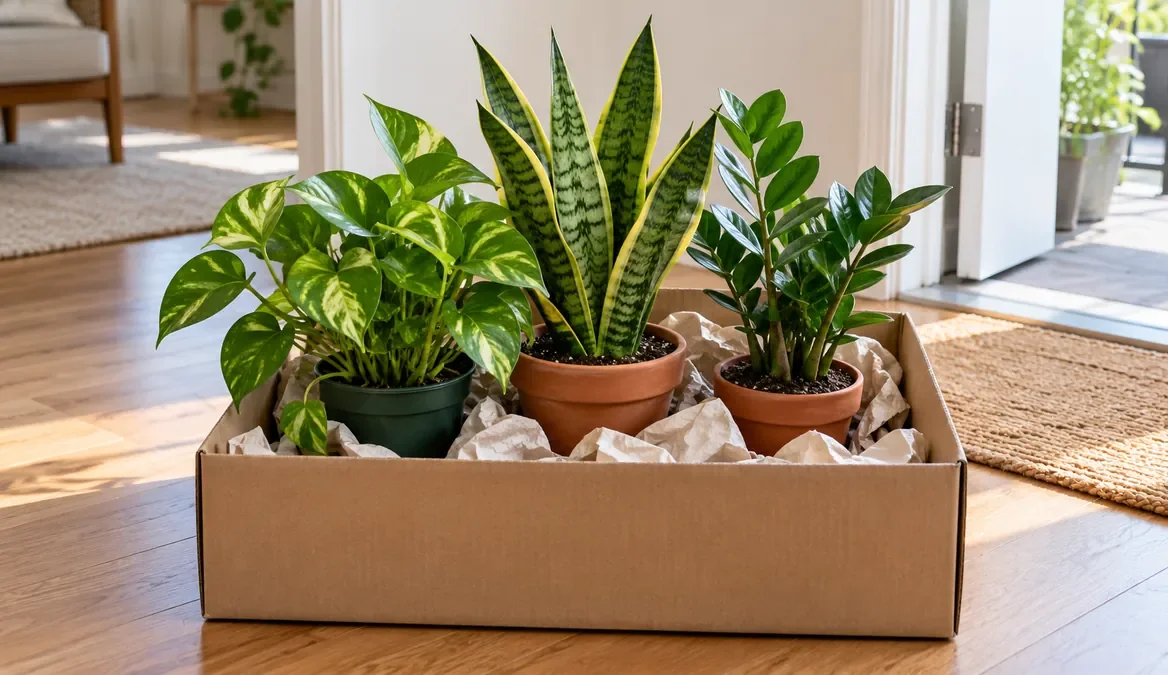
How to Pack and Move Houseplants Locally in BC
A houseplant needs a different moving plan from a sealed household box. Keep its pot stable, protect the foliage without crushing it and limit exposure to heat or cold. Before packing, confirm that the transport provider accepts live plants and check whether your route or the plant's outdoor history triggers movement restrictions.
Check acceptance and BC plant-movement rules first
Tell the provider how many plants you have, their height and pot size, approximate loaded weight and whether soil or water could escape. A service that accepts ordinary furniture may not accept live plants or guarantee their condition. If acceptance is not confirmed, arrange a suitable separate journey rather than adding plants to the load on arrival.
Local does not automatically mean unrestricted. CFIA's BC Japanese beetle guidance distinguishes regulated plants with soil from exempt material. It lists non-commercial houseplants grown indoors and never placed outdoors or used as patio plants as exempt. Houseplants grown outdoors or used on a patio can fall within the regulated category when leaving a regulated area.
Check the current map and guidance for both addresses. Where the rules apply, a movement certificate can be required year-round. Contact CFIA before moving if the plant's history or status is uncertain. Do not assume a pot, a short drive or the end of summer provides an exemption. Other plant-health restrictions may also apply; this guide does not cover interprovincial or international transport.
Make a plant-by-plant plan
List the species if known, pot size, height including foliage, any existing damage and the destination room. Photograph valuable or sentimental plants before packing. Check for visible pests and keep a questionable plant separate while seeking appropriate horticultural advice; a moving box is not pest treatment.
| Plant or container | Preparation to check |
|---|---|
| Several small pots | Use a sound box or crate that supports their weight. Fill gaps around pots so they stay upright. |
| Tall foliage | Measure full height and spread against the vehicle opening. Do not force leaves under a lid. |
| Trailing growth | Arrange stems gently within their natural flexibility; avoid catching them beneath the box. |
| Cacti or spiny plants | Keep separate from neighbouring leaves and hands; choose protection appropriate to the species. |
| Heavy or fragile outer pot | Plan support for the container and safe handling. If the nursery pot lifts out easily, consider packing the decorative pot separately. |
Never lift a plant by its trunk or foliage to compensate for a difficult container. If a large pot cannot be moved safely with your available help and equipment, resolve that before moving day. Avoid last-minute root disturbance solely to make it fit.
Support the pot and leave the foliage room
Chicago Botanic Garden's moving advice recommends snugly packed boxes and protective wrapping to reduce movement and spilling. For a local trip, choose a clean container with a sound base and support gaps around the pots with paper or suitable clean packing material. Support should hold the pot, not squeeze leaves against its rim.
Keep plants upright and avoid stacking another box on them. Label the container clearly for your own handling plan, including its destination. Keep loose saucers and decorative pieces from knocking against the pot. Check the box's actual loaded weight before carrying it; several wet pots can make a small box unexpectedly heavy.
Water according to the species and the condition of its growing medium, allowing normal drainage. Do not saturate every plant just because it is moving, and do not leave standing water in a transport box. Ask a nursery or horticultural specialist when you are uncertain about a sensitive plant's needs.
Plan the minutes outside, not only the drive
University of Maryland Extension warns that extreme transport temperatures can damage plants quickly. Include the wait at the building entrance, time beside an open vehicle and any delay before the new home is unlocked. A short drive can still involve a long period outside.
- Have the destination ready before taking plants out of the old home.
- Use weather-appropriate protection that does not crush foliage, and keep exposure brief.
- Avoid leaving plants in a parked vehicle while you complete other moving tasks.
- Keep plants clear of hot or cold air blowing directly from vehicle vents.
- Coordinate loading and unloading so plants reach an appropriate indoor space promptly.
For shared entrances and outdoor routes, use the separate rain guide and winter moving guide. Neither replaces a species-specific temperature check.
Unpack into a suitable spot
Remove temporary protection, inspect pots and foliage and place each plant in conditions appropriate to it, as similar to its former light conditions as practical. Keep pots out of the carrying route while the rest of the home is unloaded. Recheck soil moisture before watering again instead of responding to every change in appearance with more water.
If a plant deteriorates after arrival, photograph the changes and seek advice for that species and symptoms. Do not assume transport is the only possible cause. For the rest of the household handover, see what movers need on moving day.
Frequently asked questions
Can I put houseplants on any moving truck?
No. Confirm acceptance, space, handling and any exclusions with the specific provider before the day. Arrange separate suitable transport if acceptance is not confirmed.
Are indoor houseplants exempt from BC Japanese beetle movement rules?
CFIA lists non-commercial houseplants grown indoors and never placed outdoors or used as patio plants as exempt. Check the current guidance and ask CFIA if the history or route is uncertain.
Should I water every plant heavily before moving?
No universal heavy-watering rule suits all species. Follow the plant’s needs, allow drainage and avoid standing water in the transport container.
Sources
Researched 2026-10-24. Check the linked source for later changes.